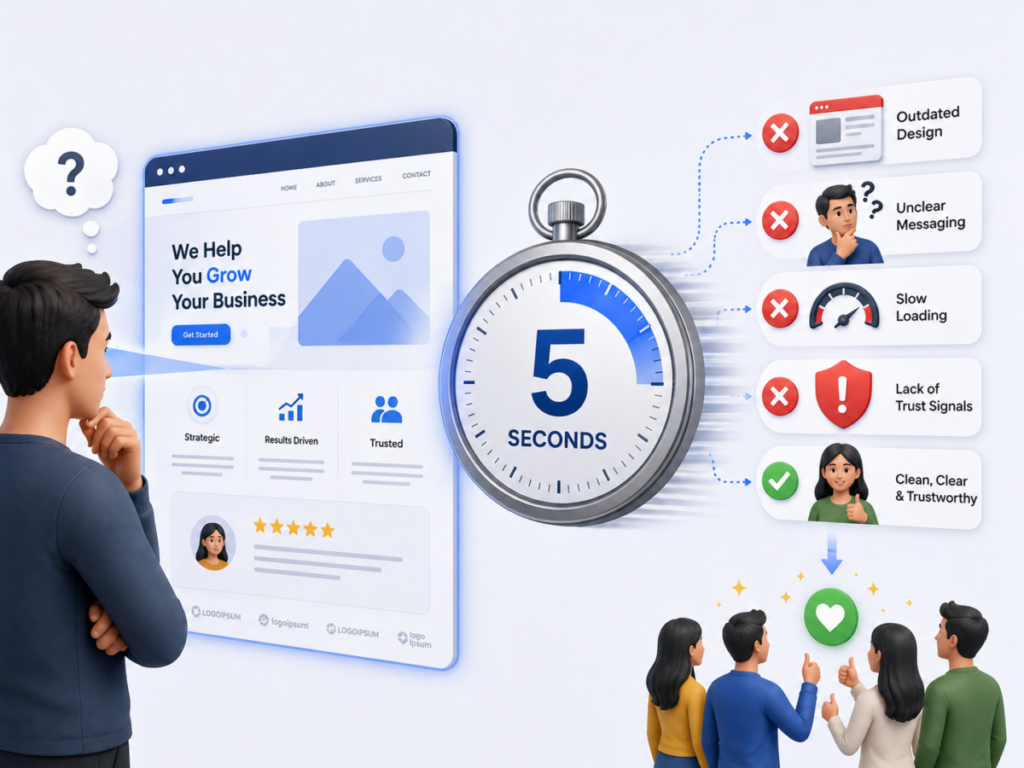

In today’s digital environment, first impressions are formed faster than most businesses realize. From my experience observing online behavior and analyzing website performance, users often decide whether they trust a business within just a few seconds. This decision is not always conscious, but it has a direct impact on whether they stay or leave.
What makes this even more critical is that businesses rarely get a second chance. A poorly structured website, slow loading speed, or unclear messaging can immediately push potential customers away. Understanding how these quick judgments happen is essential for anyone looking to build a strong digital presence.
The Psychology of First Impressions
Human brains are wired to make rapid decisions. When someone lands on a website, their mind quickly evaluates whether the experience feels safe, relevant, and worth their time. This process happens almost instantly.
From what I have seen, users are not analyzing every detail. Instead, they rely on visual cues and overall feeling. If a website looks outdated or confusing, it creates doubt. On the other hand, a clean and professional design builds confidence.
This psychological response explains why even small details can have a large impact. Colors, spacing, and layout all contribute to how a business is perceived in those first few seconds.
Visual Design as a Trust Signal
Design plays a major role in shaping perception. A visually appealing website signals professionalism and credibility. In contrast, a cluttered or inconsistent design can make a business appear unreliable.
As I have observed across multiple industries, users often associate design quality with service quality. Even if a business offers excellent products, poor design can create the impression that it is not trustworthy.
This is why investing in thoughtful design is not just about aesthetics. It is about building trust quickly and effectively.
The Role of Website Speed and Performance
Speed is another critical factor in first impressions. Users expect websites to load almost instantly. If a page takes too long, frustration sets in immediately.
From my perspective, slow performance does more than inconvenience users. It signals inefficiency. People may assume that if a website is slow, the business itself may also lack professionalism.
Improving loading speed is one of the simplest ways to enhance first impressions. It creates a smooth experience that encourages users to stay and explore further.
Messaging Clarity and Immediate Value
When users arrive on a website, they want to understand what the business offers within seconds. If the message is unclear, they are likely to leave.
Clear headlines, concise descriptions, and strong value propositions are essential. From what I have seen, businesses that communicate their purpose effectively are more likely to retain visitors.
At this point, users are asking simple questions. What is this business about, and how does it help me. If the answers are not immediately visible, the opportunity is lost.
The Impact of Branding Consistency
Consistency in branding reinforces credibility. When visual elements, tone of voice, and messaging align, it creates a cohesive experience.
In my observations, inconsistent branding often leads to confusion. Users may question whether the business is professional or reliable. Consistency helps eliminate that doubt.
Strong branding also makes a business more memorable. This increases the likelihood that users will return in the future.
Mobile Experience and Accessibility
A large portion of users access websites through mobile devices. This means that mobile experience is no longer optional. It is essential.
Websites that are not optimized for mobile create frustration. Text may be difficult to read, navigation may be unclear, and interactions may feel awkward.
From what I have seen, businesses that prioritize mobile usability tend to perform better. A smooth mobile experience ensures that users can engage with the website regardless of the device they use.
Emotional Triggers in User Perception
First impressions are not purely logical. Emotions play a significant role in how users perceive a business.
Elements such as imagery, color schemes, and tone can evoke specific feelings. A warm and welcoming design can create comfort, while a bold and modern layout can convey innovation.
Understanding these emotional triggers allows businesses to shape perception more effectively. It is not just about what users see, but how they feel when they see it.
How First Impressions Affect Conversions
First impressions directly influence conversion rates. If users feel confident and engaged, they are more likely to take action.
On the other hand, a negative first impression reduces the chances of conversion. Users may leave before even exploring what the business offers.
This is why optimizing the initial experience is so important. Small improvements in design, speed, and messaging can lead to significant increases in conversions.
Read also : Why Website Design Matters for Business Growth
Conclusion
In conclusion, the reason people judge your business in less than five seconds comes down to human psychology, design, and user expectations. These rapid judgments are powerful and often irreversible.
From my perspective, businesses that succeed online are those that understand and optimize these first moments. By focusing on clarity, performance, and emotional impact, they create experiences that build trust instantly.
Ultimately, growth begins with a strong first impression. When businesses get this right, they set the foundation for deeper engagement, stronger relationships, and long term success.


