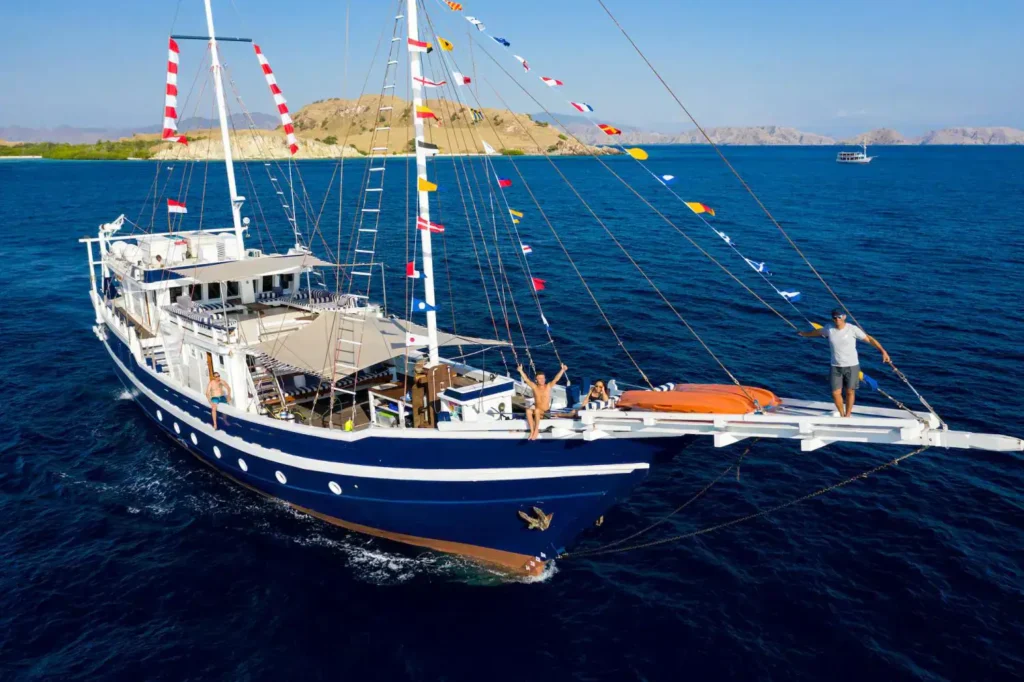

For divers who want more than one familiar circuit, premium scuba diving expeditions in Indonesia can open the door to a different style of exploration. A liveaboard dive trip built around a transition cruise follows the vessel as it moves between seasonal operating regions, linking remote islands, rarely visited reefs, and contrasting marine environments in one journey. Instead of repeating a standard route, divers experience changing seascapes, species, currents, and underwater topography along the way.
What Is a Transition Cruise?
A transition cruise is a repositioning voyage that takes place when a liveaboard moves from one main diving region to another. For operators working across the Indonesian archipelago, these journeys can connect established destinations with less-frequently visited areas in between.
Wallacea Dive Cruises has operated since 2002 and runs itineraries across Raja Ampat, Komodo, Sulawesi, Alor, the Banda Sea, Halmahera, and Triton Bay. Rather than treating the transfer as empty travel time, a transition itinerary turns the relocation itself into part of the adventure.
Why Can Transition Cruises Feel More Adventurous?
A conventional itinerary typically focuses on a single region. A transition cruise creates contrast.
One section may feature the current-swept reefs associated with Komodo Island diving, while another introduces the volcanic landscapes and pelagic potential linked with Banda Sea diving. Further east, Halmahera diving offers a different reef character, while Triton Bay diving presents its own underwater environment.
Much of eastern Indonesia sits within the Coral Triangle, which contains about 76% of the world’s known coral species. That biodiversity becomes especially meaningful when a voyage crosses several ecological zones rather than remaining within one destination.
More Variety From a Single Journey
The strongest appeal of a transition liveaboard dive trip is often variety. Divers interested in Banda Islands diving may experience very different conditions than those on a Raja Ampat diving trip. A route that later moves toward scuba diving in Sulawesi can add another layer of contrast without requiring separate hotels and operators between every region.
This is also why experienced travelers often view Raja Ampat diving and Komodo diving as complementary rather than interchangeable. Both are major choices for diving in Indonesia, yet the currents, reef structures, marine encounters, and rhythm of the journey can feel completely different.
A transition cruise allows those contrasts to become part of one continuous story.
The Boat Becomes Part of the Experience
On a land-based holiday, transport often sits between the memorable moments. On a liveaboard, the diving boat becomes part of those moments: accommodation, dive base, restaurant, photography station, and viewing platform as the landscape changes.
For divers researching dives in Komodo, this can mean waking closer to the next site rather than returning to the same base each day. For travelers interested in diving in Sulawesi or North Sulawesi, the same concept can provide access to more remote areas while keeping the journey continuous.
Wallacea operates Ambai and Seahorse across multiple Indonesian destinations, making the vessels themselves an important part of how these routes are connected.
Why Transition Routes Suit Curious Divers
Another advantage of a transition liveaboard dive trip is variety shaped by seasonality, weather, currents, and natural encounters.
Divers searching for a Raja Ampat diving liveaboard may be motivated by coral diversity and fish life, while travelers seeking the best diving in Sulawesi may prioritize different reef environments. A transition journey can appeal to both because it is less about checking off a famous destination on a list and more about following a changing marine landscape.
That makes diving on a liveaboard particularly appealing to repeat visitors who already know Indonesia’s headline destinations.
Access Can Be Its Own Form of Luxury
Luxury is not only about cabins or service. It can also mean access and time. A diving yacht reduces repeated packing, hotel changes, and daily transfers. For guests considering a luxury liveaboard diving trip, continuity can be one of the most valuable parts of the experience.
The same applies when comparing options for the best diving liveaboard journey. The most interesting route is not always the one with the most famous name; it may be the itinerary that connects several strong regions during a seasonal movement.
Who Should Choose a Transition Cruise?
Transition cruises are especially suited to experienced divers, underwater photographers, repeat visitors to Indonesia, and travelers who value variety over a predictable checklist. They can also appeal to groups whose interests range from macro subjects and coral reefs to pelagic encounters and wide-angle photography.
Divers should still review certification requirements, expected currents, trip duration, and route conditions before booking, as some itineraries may involve longer crossings or more advanced diving.
Frequently Asked Questions
Not always. Difficulty depends on the itinerary and individual dive sites. Compare the operator’s certification requirements, current depth, and previous experience before booking.
They are linked to a vessel’s seasonal movement between operating regions, so departures and routes are naturally more limited than standard itineraries.
A standard route normally explores one destination in depth. A transition cruise connects different regions, creating greater variation in scenery, conditions, marine life, and the overall journey.
A Different Way to See Indonesia Underwater
For divers who already know the major names, a transition liveaboard dive trip asks a different question: not “Which destination should I choose?” but “How much of Indonesia can one journey reveal?” By following the vessel between seasonal regions, the route itself becomes part of the adventure, connecting famous dive areas with remote reefs and a broader view of Indonesia’s marine diversity.

